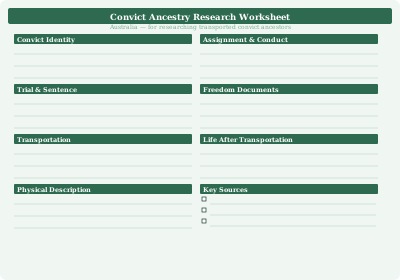
How to Use This Worksheet
- Print one worksheet per convict ancestor you are researching.
- Start with the information you already know — name, approximate birth year, or crime.
- Search the NAA RecordSearch or FamilySearch Australian Convict Index to find the convict indent and ship name.
- Use the indent record to fill in the Physical Description section — these records often contain remarkable detail.
- Tick off the sources in the Key Australian Sources section as you search each one.
- Record post-transportation life details once you have located freedom documents and marriage or death records in the colonial BDM registries.
About Convict Ancestry Research
An estimated 20 per cent of Australians are descended from the approximately 162,000 convicts transported to Australia between 1788 and 1868. Transportation was carried out across three main destinations: New South Wales (and its extension into what became Queensland and Victoria), Van Diemen's Land (now Tasmania), and Western Australia. Researching a convict ancestor opens access to some of the most detailed personal records surviving from early colonial Australia — including physical descriptions, literacy assessments, conduct records, and detailed assignment histories.
Convict records are held across several repositories depending on the colony and the type of record. The most important are the National Archives of Australia (NAA, naa.gov.au), which holds convict indents (arrival lists) and related records; State Records NSW (SRNSW), which holds conduct records and assignment registers for NSW; the Tasmanian Archive and Heritage Office (TAHO) for Van Diemen's Land; and the State Records Office of Western Australia for Fremantle-arrived convicts (1850–1868). All of these collections have been partially digitised and are increasingly accessible online.
For published newspaper notices relating to convicts — arrival announcements, notices of misbehaviour, reports of pardons — Trove is invaluable and free.
Understanding Convict Records
- Convict indent. The list prepared on arrival listing name, physical description, crime, sentence, and trade. The starting point for any research. Available via NAA RecordSearch.
- Assignment records. Which employer or government department the convict was assigned to, and in what location. NSW assignment records are at SRNSW.
- Conduct records. Records of offences committed in the colony and the punishments given. These can reveal movements and character but also have significant limitations — the absence of conduct records is itself meaningful for a well-behaved convict.
- Ticket of Leave. Permission to work independently within a specified district. Usually granted after good conduct over several years.
- Conditional Pardon. Freedom within the colony only — the convict could not return to the UK or Ireland.
- Certificate of Freedom / Absolute Pardon. Full freedom to go anywhere, equivalent to never having been convicted.
Frequently Asked Questions
What records are available for researching convict ancestors?
The main collections are: NAA RecordSearch (indent lists, pardons), State Records NSW (assignment and conduct records), Tasmanian Archive and Heritage Office (TAHO), Public Record Office Victoria (PROV), and State Records Office of Western Australia. FamilySearch and Ancestry have indexed versions of many records. Trove covers convict-related newspaper notices.
What is a convict indent?
The indent is the list prepared when a convict ship arrived in a colony, recording each convict's name, age, physical description, trade, literacy, religion, crime, sentence, and place of trial. It is the most detailed record of a convict's personal characteristics and the essential starting point for research. NSW indents are available through NAA RecordSearch.
How do I find which ship my convict ancestor arrived on?
Search the NAA RecordSearch or the free Australian Convict Index on FamilySearch by name and approximate trial date. These return the ship name, arrival date, and colony. Once you have the ship, you can cross-reference the full manifest.