How to Use This Template
- Use one worksheet per person in your family tree.
- Use maiden names for women — record their birth surname, not married name.
- Note the source for each fact you record so you can verify it later.
- Leave fields blank rather than guessing — accuracy is more valuable than completeness.
About This Template
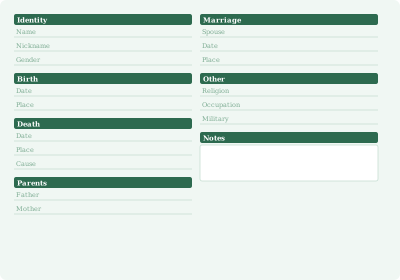
An individual research worksheet provides a dedicated page for recording everything known about a single person in your family tree. Where a family group sheet captures a whole family unit, the individual worksheet focuses on one person in depth — their birth, baptism, education, occupation, military service, marriages, children, death, burial, and any additional notes from your research.
This template is most useful when you are actively researching a specific ancestor and need a working document to collect and organise information from multiple sources. As you find new records — a birth certificate here, a census entry there, a newspaper notice elsewhere — each new piece of information has a designated field on the worksheet. When all fields are complete, the worksheet becomes a comprehensive biographical summary for that individual.
The two-column layout keeps the page compact while giving enough space to record sources alongside each piece of information. Always note your source when you record a fact — even a note like "family knowledge, unverified" is better than nothing. Being clear about which facts are confirmed and which are uncertain is a core discipline of genealogy research.
Tips for Using This Worksheet
- One worksheet per person. Do not combine two people on one sheet, even if they have the same name. Use the person's full birth name as the heading.
- Record maiden names for women. Always use a woman's birth surname, not her married name, as the primary identifier. This makes it easier to connect her to her parents' family records.
- Cite every source. Note where each fact came from. A birth certificate, a census record, and a family memory are all valid sources — but each should be identified so you can verify or revisit it.
- Mark uncertain facts. Use a question mark or "approx." to indicate information that is estimated rather than confirmed. Distinguishing between certain and uncertain facts is essential to accurate genealogy.