How to Use This Template
- Open the template in your browser using the button above.
- Print in landscape orientation on A4 paper, or save as PDF.
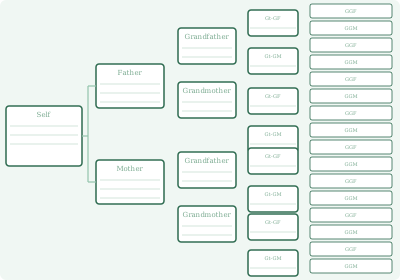
- Start with yourself on the left side of the chart.
- Fill in your parents, grandparents, and great-grandparents moving right across the columns.
- Great-great-grandparents appear on the far right — leave blank if unknown and fill in as you research.
About This Template
The 5-generation pedigree chart extends the standard 4-generation format by one more column — adding your 16 great-great-grandparents on the far right. In total, the chart can record 31 direct ancestors on a single A4 landscape page. Because the fifth column contains 16 boxes, the text is necessarily small, making this chart best suited to researchers who have already made significant progress and know most of their great-grandparents.
Most genealogists start with the 4-generation pedigree chart and move to the 5-generation version once the first chart is largely filled in. The 5-generation chart is particularly useful when you are researching a single surname line back through the 1800s — it lets you see five generations of one family on a single page, which can reveal naming patterns, migration paths, and research gaps at a glance.
Great-great-grandparents were typically born between roughly 1840 and 1880. Finding them often requires searching 19th-century civil registration records, church registers, and census records. FamilySearch and Trove (for Australia) are good free starting points for this era.
Frequently Asked Questions
How many people does a 5-generation pedigree chart show?
A 5-generation pedigree chart shows 31 people: you, 2 parents, 4 grandparents, 8 great-grandparents, and 16 great-great-grandparents. The fifth column is compact — this template is for researchers who already have many 5th-generation ancestors identified.
When should I use a 5-generation chart instead of a 4-generation one?
Use the 5-generation chart once your 4-generation pedigree chart is largely filled in and you have begun identifying great-great-grandparents. Start with the 4-generation version — it is the standard for most genealogy research.
How do I find my great-great-grandparents?
Birth and marriage certificates for your great-grandparents will name their parents. Census records, church registers, and FamilySearch are good sources for 19th-century ancestors. For Australian research, Trove provides free access to digitised historical newspapers which often contain birth, marriage, and death notices.