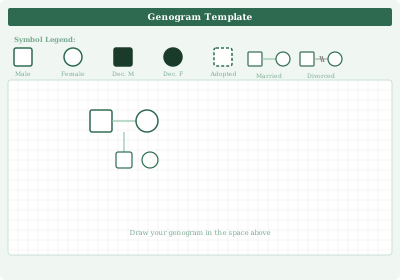
How to Draw a Genogram
- Open and print the genogram template using the button above.
- Start with yourself at the centre of the drawing area — use a square for male, circle for female.
- Add your parents above, connected by a horizontal line showing their relationship.
- Add siblings to the side, connected by a vertical line dropping from the same parental line.
- Continue upward for grandparents and downward for children.
- Use a filled symbol to show deceased family members.
What is a genogram?
A genogram is a family diagram that shows both relationships and patterns across generations — including medical history, behaviours, and emotional dynamics. Unlike a standard family tree, a genogram uses standardised symbols to represent gender, relationship status, and life events.
Genograms are widely used in medicine, psychology, and social work as a tool for understanding family health patterns and dynamics. They are also useful for genealogy research when you want to record more than just names and dates.
How This Template Works
This blank genogram template provides a drawing area with a pre-printed symbol legend in the corner, so you can refer to the standard symbols as you draw. The legend includes the core person symbols (square for male, circle for female, filled symbol for deceased) and common relationship line types (married, de facto, separated, divorced).
Work in pencil when drawing your first genogram — the layout often needs adjusting as you add more people and relationships. Start with yourself at the centre, draw your parents above, and then extend outward to grandparents and siblings. For a full explanation of all genogram symbols and step-by-step drawing instructions, see the Genogram Symbols guide.
Who Uses Genograms?
- Medical professionals — to map hereditary conditions and health patterns across three generations
- Therapists and social workers — to understand family dynamics, relationship patterns, and cycles of behaviour
- Genealogists — to record relationship details (marriages, separations, adoptions) that a standard family tree cannot capture
- Anyone researching family history who wants a more complete picture of how their family members were connected