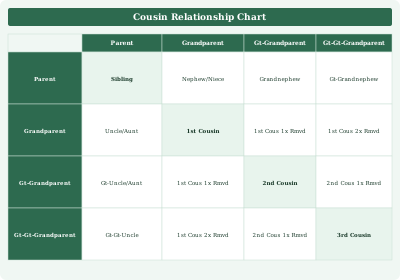
How to Use This Chart
- Find your shared common ancestor with the other person.
- Count how many generations you are from that ancestor — this gives your row.
- Count how many generations the other person is from that ancestor — this gives their column.
- Where the row and column meet is your relationship.
What does "once removed" mean?
"Removed" means a one-generation difference between two cousins. If you and another person are 1st cousins, you share a grandparent and are in the same generation. But your 1st cousin's child is your 1st cousin once removed — they are one generation below you, while still sharing the same common ancestor (your grandparent).
The number of times "removed" simply tells you how many generations apart the two cousins are. Twice removed means two generations of difference, and so on.
Understanding Cousin Degrees
The degree of a cousin relationship is determined by how far back you have to go to find a shared common ancestor:
- 1st cousins — share a grandparent (your parent and their parent are siblings)
- 2nd cousins — share a great-grandparent (your grandparent and their grandparent are siblings)
- 3rd cousins — share a great-great-grandparent
- 4th cousins — share a great-great-great-grandparent
The further back the shared ancestor, the more distantly related you are. DNA testing services like AncestryDNA and 23andMe identify genetic relatives by predicted relationship, and understanding cousin terminology helps you interpret those results. A match listed as "3rd cousin" means you likely share a great-great-grandparent — useful when trying to identify which branch of your family tree a new DNA match belongs to.
This chart also helps when filling in genealogy forms — knowing the correct relationship term for each person makes your records clearer for anyone who reads them later, including future family members continuing your research.